
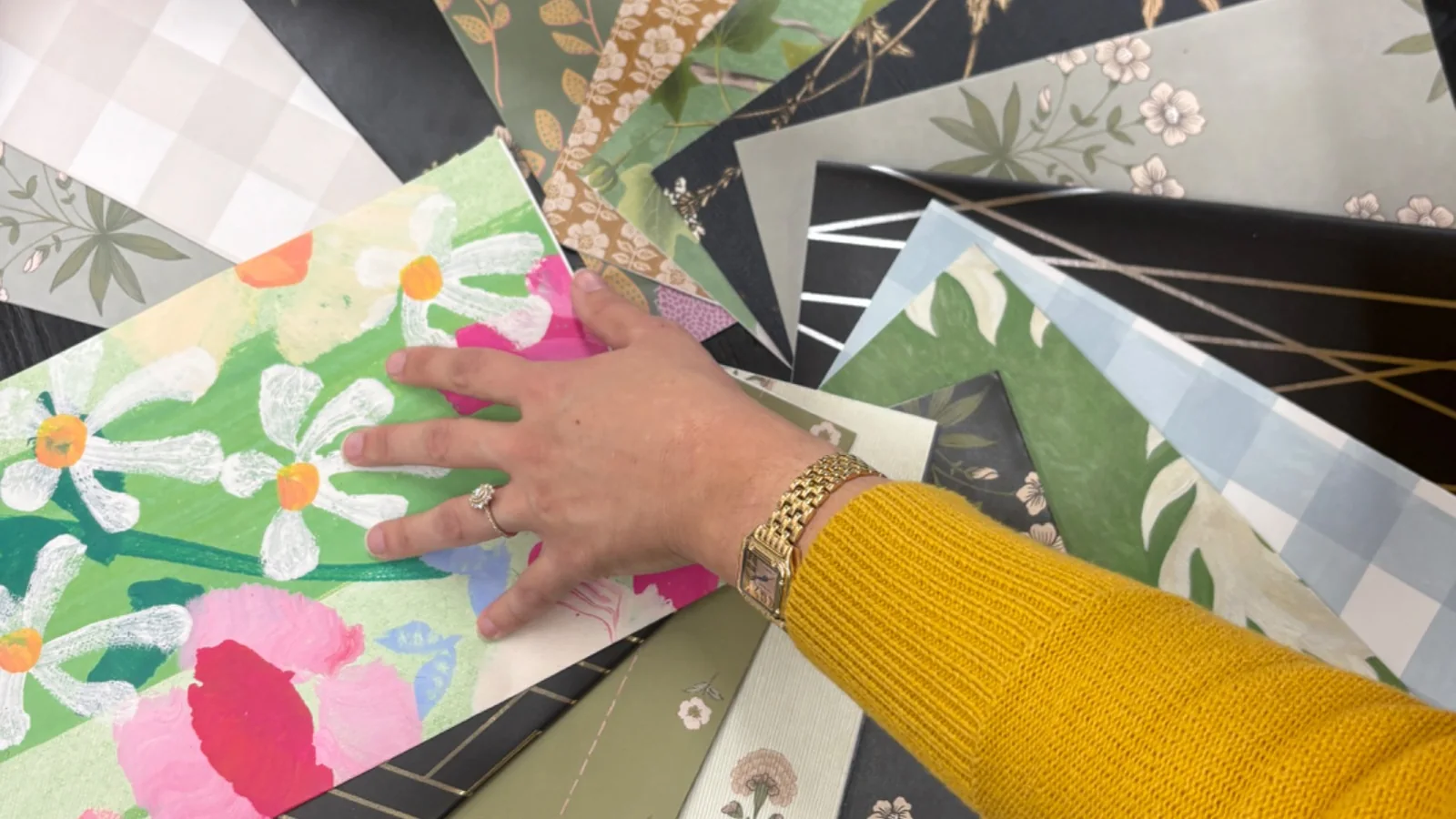
Wallpaper vs Paint: Which Is Better for Toowoomba Homes?
Wallpaper is usually the better choice when you want pattern, texture or a distinctive feature wall. Paint is generally more suitable when you want a simple background that is easier to update.
For many Toowoomba homes, the best result is a combination: wallpaper on a focal wall, with coordinating paint across the remaining walls.
At Curtain Warehouse & Interiors, we help customers compare wallpaper samples in Toowoomba with curtain fabrics, blinds, flooring, furniture and paint colours before making a final selection.
Wallpaper vs Paint: Quick Comparison
Wallpaper creates a stronger visual impact by adding pattern, texture, murals and detail, making it well suited to feature walls and statement rooms. It usually costs more and requires accurate measuring, pattern alignment and a smooth, properly prepared surface, but it can connect several colours and finishes throughout a room.
Paint is generally more affordable and straightforward to apply. It works well across connected spaces, provides a quieter background for furnishings and is usually easier to repaint when you want to update the room.
In simple terms, choose wallpaper when you want the wall to become a key design feature. Choose paint when you want a clean, flexible and understated finish.
When Is Wallpaper Better Than Paint?
Wallpaper may be the better choice when you want to:
- Create a bedroom feature wall
- Add pattern to a living or dining room
- Introduce texture into a neutral interior
- Add character to an entrance or hallway
- Create a mural or large-scale statement
- Coordinate several colours throughout a room
- Add visual interest without replacing furniture
Modern wallpaper is available in a wide variety of botanical, geometric, striped, mural and textured designs.
Wallpaper can help connect the different elements within a room. Colours from the design may be repeated through custom curtains, cushions, upholstery, rugs, bedding or artwork.
Where the wallpaper is highly detailed, quieter curtain fabrics and furnishings can prevent the room from feeling visually crowded.
When Is Paint the Better Choice?
Paint may be more suitable when you want:
- A simple colour change
- A consistent finish across several rooms
- Greater flexibility for future redecorating
- A minimalist appearance
- A quieter background for patterned furnishings
- A surface that may be easier to touch up
Paint can be particularly effective when the room already contains strong patterns through curtains, rugs, furniture or artwork.
For example, if patterned curtains are the main decorative feature in a living room, a simple painted wall may provide better balance than introducing another detailed pattern.
Can Wallpaper and Paint Be Used Together?
Yes. Combining wallpaper and paint is one of the most practical ways to create a balanced interior.
A common approach is to install wallpaper on the room’s natural focal wall and paint the remaining walls in a colour taken from the wallpaper design.
Other options include:
- Wallpaper above wall panelling
- Wallpaper inside shelving or recessed areas
- A mural surrounded by neutral painted walls
- Wallpaper behind a bed with paint elsewhere
- Wallpaper in an entrance with painted adjoining rooms
The paint colour should be selected while viewing the physical wallpaper sample. Colours can look different under showroom lighting, natural sunlight and warm interior lighting.
It is also important to compare the wallpaper and paint with the flooring, curtains, blinds and furniture before either selection is finalised.
Choosing Wallpaper for Different Toowoomba Homes
Toowoomba contains a broad mix of Victorian, Edwardian, interwar, postwar and contemporary homes. Toowoomba Regional Council identifies Victorian, Edwardian, interwar and postwar houses as four common heritage styles found throughout the region. Read Toowoomba Regional Council’s guide to local heritage house styles.
The right wallpaper should suit the individual property, its architecture and the way the room is furnished.
Character and heritage-style homes
Older homes may suit wallpaper designs such as:
- Traditional botanical patterns
- Florals
- Stripes
- Damask-inspired designs
- Heritage-inspired colours
- Smaller repeating patterns
These designs can complement features such as timber floors, higher ceilings, decorative cornices and traditional joinery.
Established suburbs such as East Toowoomba, Mount Lofty, Newtown and South Toowoomba contain a mixture of older and newer homes. Wallpaper should therefore be chosen for the individual property rather than its suburb alone.
Interwar and postwar homes
Interwar and postwar interiors may suit:
- Geometric patterns
- Restrained florals
- Fine stripes
- Retro-inspired designs
- Textured neutrals
- Muted greens, blues and earthy tones
A feature wall can introduce character without requiring major structural changes or covering every wall.
Contemporary homes
Newer homes around Middle Ridge, Glenvale, Highfields and Westbrook may suit:
- Linen-look wallpaper
- Large botanical designs
- Murals
- Soft abstract patterns
- Neutral geometric designs
- Plaster or stone-inspired textures
Contemporary homes often use streamlined finishes and neutral paint colours. Wallpaper can add warmth, texture and personality to rooms that might otherwise feel visually plain.
How Toowoomba’s Natural Light Affects Wallpaper
Wallpaper colours can change noticeably throughout the day.
East- and west-facing windows receive low-angle sunlight, while west-facing rooms can experience particularly strong afternoon sun, heat and glare. Read the Australian Government’s Your Home guidance on orientation and sunlight.
Warm afternoon light may make cream, green, beige, taupe and metallic wallpaper finishes look warmer or brighter than they appeared in a showroom.
Before ordering wallpaper, place a physical sample on the intended wall and view it:
- In the morning
- During the afternoon
- Under evening lighting
- With curtains or blinds open
- With curtains or blinds closed
- Beside flooring and furniture
- Beside curtain or upholstery fabrics
In rooms exposed to strong afternoon light, consider how the wallpaper will work with custom blinds, curtains or plantation shutters used to manage light, privacy and glare.
Not sure which wallpaper will work in your room?
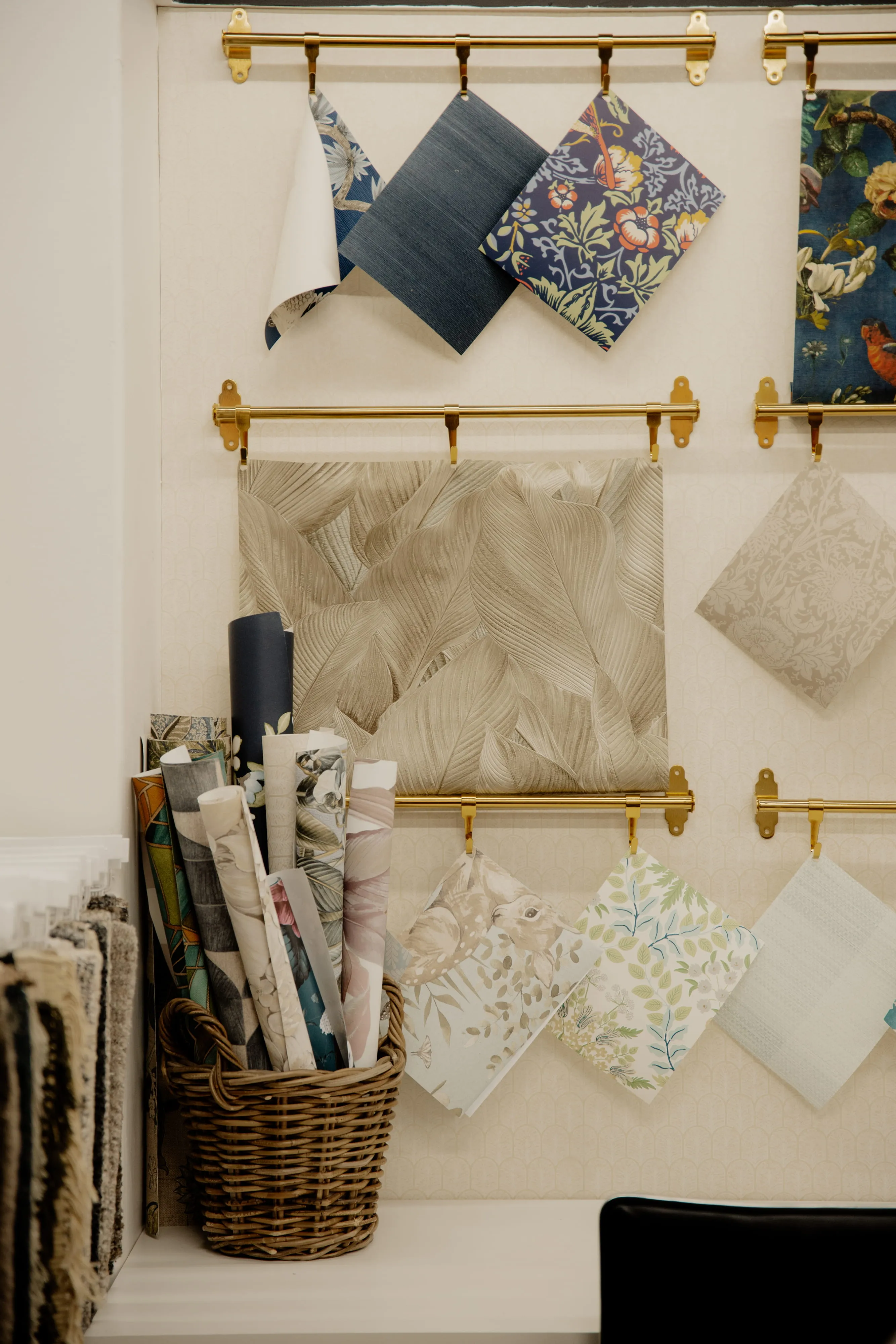
Visit our Toowoomba showroom to compare wallpaper samples with curtain fabrics, blinds, and other interior finishes.
Where Does Wallpaper Work Best?
Bedrooms
Wallpaper works particularly well behind a bed because that wall is usually the room’s natural focal point.
A feature wallpaper can introduce colour and personality without requiring every wall to be covered.
Compare the wallpaper with the bedding, flooring, bedhead and curtain fabric. The different finishes do not need to match exactly, but their colours and pattern scales should complement each other.
If the bedding or curtains already contain a strong pattern, a textured or low-contrast wallpaper may create a more balanced result.
Living and dining rooms
Wallpaper can be effective on:
- A fireplace wall
- A large uninterrupted wall
- A wall behind a console
- A wall behind a dining table
- A wall visible from the entrance
A neutral textured wallpaper can add depth without competing with furniture or artwork.
Where patterned curtains or rugs are already prominent, choose a quieter wallpaper so the room has one clear focal point.
Entrances and hallways
An entrance can be an effective place for wallpaper because it creates an immediate impression when someone enters the home.
Depending on the available light and wall space, suitable options may include stripes, botanical designs, small repeating patterns or subtle textures.
Hallways with limited natural light may benefit from lighter backgrounds or lower-contrast designs.
Powder rooms and small spaces
Small rooms do not automatically require plain white walls.
A strong wallpaper pattern can make a compact powder room, study or entrance feel intentional and memorable. For a softer result, consider tonal patterns, fine stripes or light textured designs.
Any moisture, ventilation or wall-damage problems should be addressed before wallpaper is installed.
Commercial interiors
Wallpaper may also be suitable for reception areas, offices, consultation rooms, meeting rooms and retail spaces.
The selected product should suit the room’s level of use, cleaning requirements and overall business presentation.
Feature Wall or the Whole Room?
A feature wall usually works best when the room already has a clear focal point, such as:
- Behind a bed
- Around a fireplace
- Behind a dining table
- Behind a console
- On the first wall visible from an entrance
The chosen wall should feel intentional rather than simply being the easiest wall to cover.
Wallpapering the whole room may be more suitable when:
- The pattern is subtle or tonal
- The wallpaper introduces texture rather than a bold print
- Several walls are visible at once
- A more complete or immersive result is wanted
- The curtains and furniture are relatively restrained
A subtle wallpaper used throughout a room can sometimes create a more finished result than a single feature wall.
Does Wallpaper Cost More Than Paint?
Wallpaper will often have a higher initial cost because the complete project may include:
- Wallpaper rolls or mural panels
- Pattern-matching allowances
- Wall preparation
- Adhesive
- Professional installation
- Trimming around windows, doors and fittings
The quantity required depends on more than the wall’s basic square-metre area. Roll dimensions, pattern repeat, windows, doors and installation complexity can all affect the final amount.
Paint costs also vary according to paint quality, wall repairs, primer requirements, number of coats, room size and labour.
It is better to compare the complete cost of the finished project rather than only comparing the price of wallpaper rolls with the price of a tin of paint.
Wall Preparation and Maintenance
Both wallpaper and paint require a clean, stable and properly prepared wall.
Wallpaper should not be relied upon to hide:
- Cracks
- Dents
- Loose paint
- Uneven joins
- Moisture damage
- Poorly filled holes
Before installation, the wall may need to be cleaned, repaired, filled, sanded, sealed or primed.
Dulux Australia also recommends checking, cleaning and repairing wall surfaces before painting. Read Dulux Australia’s wall preparation guide.
Neither wallpaper nor paint should be used to conceal significant cracks, dampness, mould or unstable surfaces without first addressing the underlying cause.
Maintenance requirements depend on the specific product. Some wallpapers are washable or wipeable, while others require more delicate cleaning. Paint finishes also vary in their resistance to marks and scrubbing.
Before choosing either finish, consider whether children or pets use the room and whether the walls are likely to be exposed to dirt, food or moisture.
Common Wallpaper Selection Mistakes
Choosing from an online image alone
An online image may not accurately show the wallpaper’s true colour, texture or pattern scale. Always view a physical sample before ordering.
Ignoring the room’s lighting
Wallpaper can look different in morning light, afternoon sunlight and evening lighting. Test the sample in the intended room at different times of the day.
Selecting each finish separately
Wallpaper may look attractive on its own but clash with the curtains, flooring or furniture after installation.
Consider wallpaper, paint, curtains and furnishings as one complete interior scheme.
Choosing the wrong feature wall
The selected wall should reinforce the room’s natural focal point rather than simply being the easiest wall to cover.
Ignoring the pattern repeat
A large pattern repeat can increase the amount of wallpaper required and affect how the design aligns across the wall.
Using too many competing patterns
When the wallpaper is highly detailed, surrounding curtains, rugs and furnishings may need to be more restrained.
Customer Experience In Toowoomba
Wallpaper feature wall - (Orange Grove Road -Highfields)
One customer in Highfields chose wallpaper for a feature wall rather than painting every wall in the room. They loved the finished result because the wallpaper created a stronger focal point and added more character without requiring the entire space to be changed. We helped with the selection process by using a photo of their room and AI visualisation tools to show how the wallpaper would look in the space, making it easier for them to picture the final result before making a decision.
Coordinating wallpaper and paint
Another customer combined wallpaper with a coordinating paint colour.
They felt the finished room looked noticeably more stylish. Using paint alongside the wallpaper kept the overall interior balanced while allowing the wallpaper to remain the main design feature.
Frequently Asked Questions
Is wallpaper more expensive than paint?
Wallpaper often has a higher initial cost because the project may include the wallpaper, pattern allowances, wall preparation and professional installation. The final cost depends on the selected product, wall size and condition.
Can wallpaper be installed over painted walls?
Wallpaper may be installed over a painted wall when the surface is sound and properly prepared. Glossy, damaged or uneven walls may require additional preparation.
Can wallpaper be used in small rooms?
Yes. A subtle wallpaper can make a smaller room feel refined, while a bold design can create an intentional and dramatic result.
Can wallpaper and paint be used in the same room?
Yes. Wallpaper on a focal wall with coordinating paint on the remaining walls is a practical and popular approach.
Should I choose wallpaper or curtains first?
There is no single correct order. However, wallpaper and curtain fabrics should be compared together before either selection is finalised.
Does wallpaper hide imperfect walls?
Wallpaper should not be used as a substitute for proper wall repairs. Cracks, dents and uneven surfaces may remain visible and can sometimes become more noticeable.
Compare Wallpaper Samples in Toowoomba
Choosing wallpaper from a small online image can make it difficult to judge the true colour, texture and pattern scale.
At Curtain Warehouse & Interiors, customers can view wallpaper samples in our Toowoomba showroom and compare them with custom curtains, blinds, shutters and other interior finishes.
Curtain Warehouse & Interiors has served Toowoomba and the Darling Downs for more than 35 years, with an experienced local team helping customers select curtains, blinds, shutters, wallpaper and coordinated interior finishes.
Visit our showroom at 493 Ruthven Street, Toowoomba City, to explore our wallpaper collections and request samples for your home or business. The showroom is open Monday to Friday from 9 am to 5 pm and Saturday from 9 am to 1 pm.
We assist customers throughout Toowoomba and surrounding areas, including Rangeville, Middle Ridge, East Toowoomba, Mount Lofty, Highfields and Westbrook.
Call (07) 4632 9173 or contact our local team to arrange a wallpaper selection consultation.
Button text: Book a Wallpaper Selection Consultation

.svg)